

Athletic and Sports Injury Treatment in Beverly Hills
Sports injuries can slow you down, limit performance, or take you out of the game completely. At Elite Chiropractic Beverly Hills, Dr. Jamie Mahtaban and Dr. Yuliya Gruppina provides focused care as a chiropractor for sports injuries in Beverly Hills.
We analyze the mechanics and interactions of your joints and muscles so that you can rehabilitate and optimize your performance. It is important to understand that most injuries do not occur suddenly; instead, they accumulate over time because of bad mechanics, repetitive stress, and inadequate recovery.
Our approach is structured and practical. We evaluate how your body copes with stress, loading, and physical activity associated with the chosen sport or exercise.
Why Should Athletes See a Chiropractor?
Athletes have a lot of demand on their bodies. To perform at their best, it is good to get evaluated for recovery. Chiropractors can identify joint fixations and tight muscles, helping athletes be their best.
Athletes are also prone to sports injuries, and we can help treat them and get them back on the field faster.
Common Problems Athletes Experience
Athletes come in with many different types of problems. They are very in tune with their bodies. Sometimes they come in because something does not feel right, or they feel they do not have a certain range of motion.
Other times, it is chronic pain such as ankle sprains, lower back pain, disc pain, neck pain, or arm pain like tennis elbow or golfer’s elbow. Athletes may also have shoulder, foot, or toe pain.
How We Diagnose Sports Injuries
Athletes are like any other person in terms of what can happen to their body. The diagnosis depends on what they come in with.
For example, if the patient presents with elbow pain, we perform an elbow examination, assess the surrounding muscles, palpate the joint, and determine the source of the problem.
If it is hip pain, we thoroughly evaluate the hip.
At Elite Chiropractic Beverly Hills, treatment is based on findings from the assessment. We conduct a thorough assessment to help us identify the exact cause of pain and movement limitation.
Treatment Plan For Sports Injuries
Treatment depends on the specific injury. In some cases, athletes are not in pain but want to improve their mobility, range of motion, or strength. When there is mobility issue in the joints, it can create an energy leak. Our chiropractors help guide that process by identifying where a joint is not moving properly.
Some of the expected treatments are:
- Chiropractic adjustments
- Soft tissue therapy
- Mobility exercises
- Strength training
We help restore movement to the joint and work on strengthening to support better performance, including becoming stronger and faster. Chiropractic care for athletes are not only for pain but also for their enhancement.
Our Experience Treating Athletes in Beverly Hills
Dr. Mahtaban and Dr. Gruppina have treated many athletes, including NBA players, NFL players, swimmers, tennis players, and golfers. We have experience treating athletes across many sports.
We enjoy working with high-level athletes because they are willing to do what it takes to improve. They follow through with exercises and treatment plans, which help them achieve good results.
Dr. Mahtaban also have an athletic background in football and basketball, which helps him understand the types of injuries that can occur and better assess their condition.
Athletic or Sports Injury Patient Case Study
We had an NBA player with chronic lower back pain. He was getting treatment regularly, but the improvement would only last for a short time before the pain returned.
We performed targeted soft tissue therapy around his hips, groin, and hip flexors to reduce pressure on his back. We then adjusted his spine to improve the range of motion and showed him exercises to help maintain the results.
The patient reported significant progress, and the results lasted longer than his previous treatments.
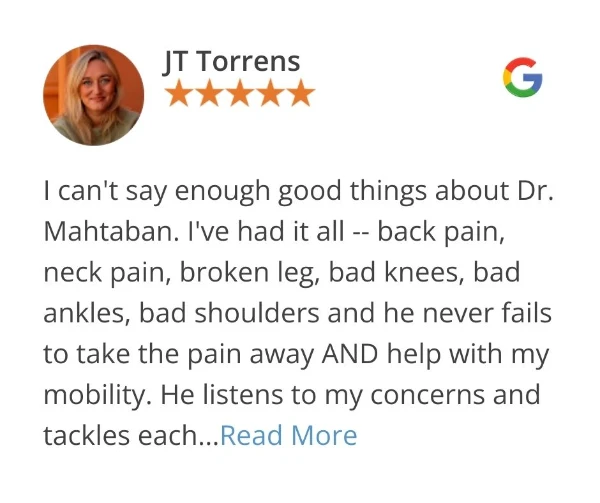
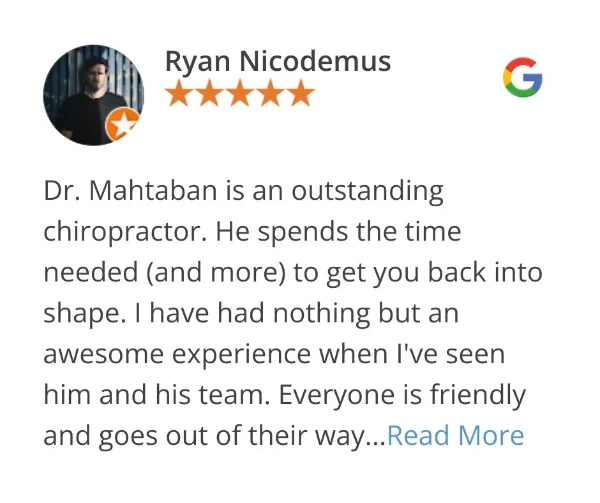
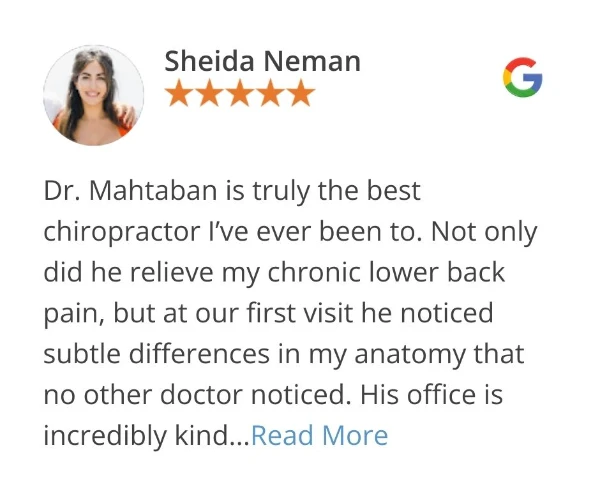
Sports Injuries Testimonials & Reviews
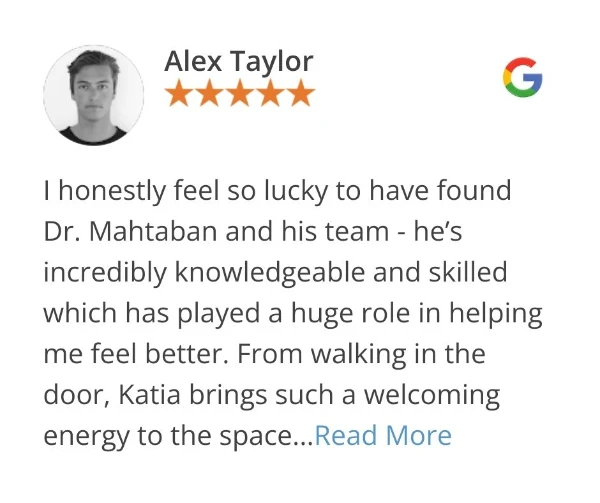
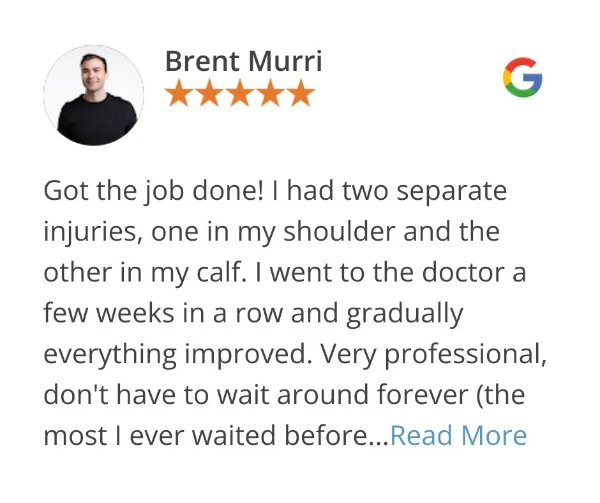
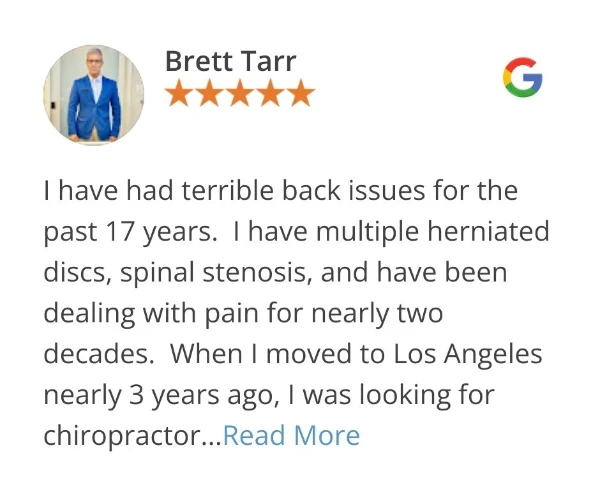
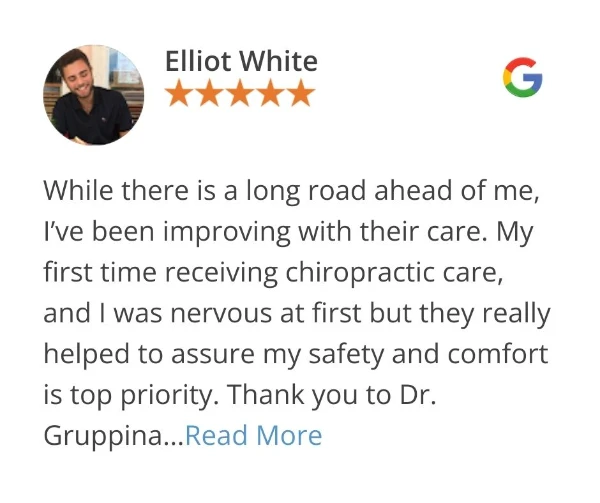


Book an Appointment for Sports Injury Treatment
If pain is limiting your performance, Dr. Mahtaban and Dr. Gruppina are here to help you understand your options.
Call us at (310) 692-4469 or book online using the tool below.
Frequently Asked Questions (FAQs)
How many sessions will I need to recover?
The number of visits depends on the severity of your injury, how long it has been present, and your training demands. After your initial evaluation, we outline a recommended frequency. Some athletes improve quickly, while chronic or disc-related cases may require a longer plan.
Which types of athletes and sports do you commonly treat?
We treat football, basketball, CrossFit athletes, runners, lifters, and active adults for sprains, disc-related back pain, shoulder strain, knee pain, and muscle tightness.
Is chiropractic safe for athletes?
Yes. When performed by trained professionals, chiropractic care is considered very safe. Treatment is tailored to your age, sport, and condition. We perform a thorough history and exam to reduce risk and ensure care is appropriate for you.
Will I need to stop training while in care?
Not always. In many cases, we modify rather than completely stop activity. The decision depends on the injury type and severity. The goal is to keep you active when safe while protecting healing tissues.
Do I need a referral from my coach or doctor?
No referral is typically required to see a chiropractor. However, we are happy to coordinate with your coach, trainer, or other healthcare providers to keep everyone aligned on your recovery plan.
Does insurance cover sports-injury chiropractic?
Coverage varies by plan. Our office can help review your benefits and explain what may be covered. We also discuss self-pay options if needed.
Can you help prevent future injuries?
Prevention is a major focus. By improving joint motion, addressing muscle imbalances, and teaching better movement patterns, we aim to reduce reinjury risk and support long-term performance.
What are some home care remedies for immediate recovery?
While waiting for your visit or between sessions, a few simple strategies can help support recovery:
- Modify aggravating activities instead of pushing through sharp pain.
- Use ice for fresh swelling or heat for chronic muscle tightness, depending on what feels soothing.
- Perform gentle mobility drills only if they do not increase symptoms.
- Prioritize hydration, balanced nutrition, and quality sleep to support tissue healing.
- Seek evaluation if pain is worsening, radiating, or not improving after several days.