
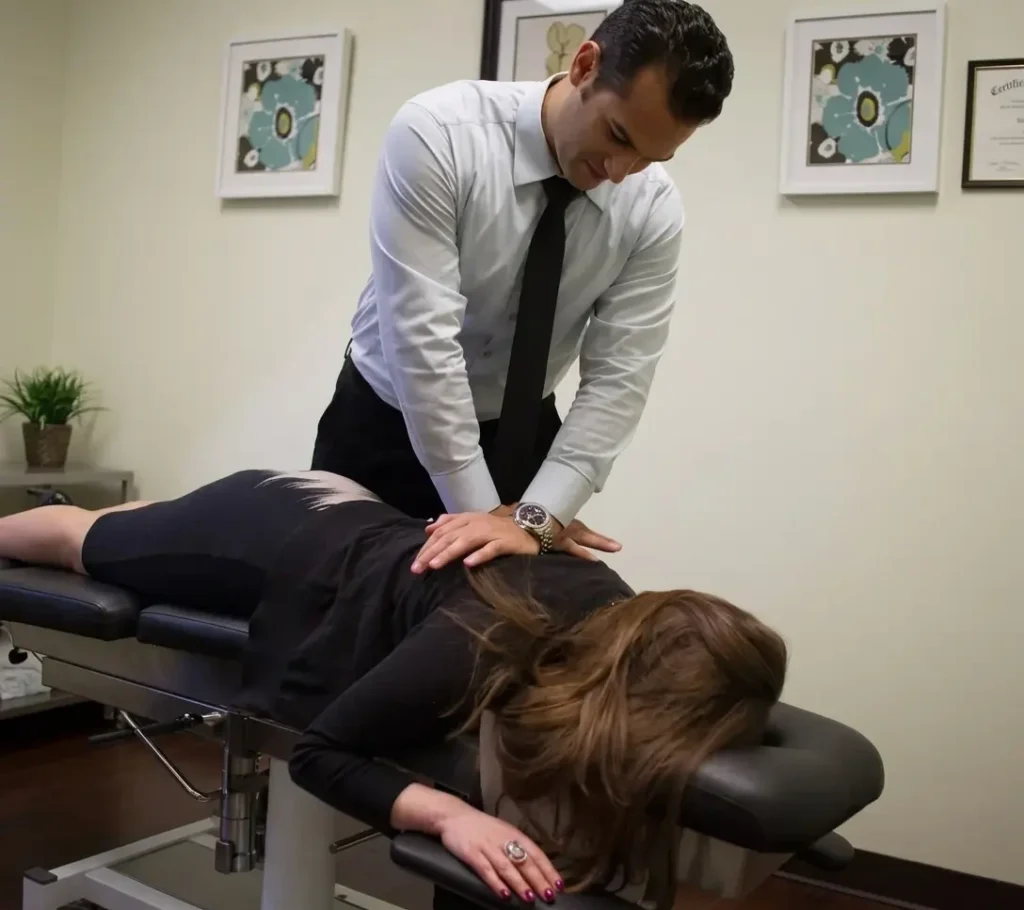
Spinal Decompression Therapy in Beverly Hills
Spinal decompression is a nonsurgical process that aims to ease the pressure on the spine. The procedure involves stretching the spine in a controlled, targeted manner to increase the spinal disc space.
Spinal decompression is commonly used as part of a conservative chiropractic approach to support mobility and healing. This form of care is non-surgical and differs from surgical spinal decompression procedures such as a laminectomy.
Led by our licensed chiropractor, Dr. Jamie Mahtaban, DC, and Dr. Yuliya Gruppina, DC, decompression therapy is carefully tailored to individual needs and combined with a movement-based approach.
At Elite Chiropractic Beverly Hills, our goal is to support spinal function, improve comfort, and encourage healthier movement without the use of medication or surgery.
What Is Spinal Decompression?
Spinal decompression is a therapy in which we make you lie on a decompression table so that we can gently stretch the lower back with a precise, small force. We perform this in a certain way that allows the disc to open up rather than compress it.
As the disc opens, it creates suction, which works like negative pressure. When you apply force to something like a suction cup, there is a force that pulls back in. This is what we are trying to do to help rehydrate the disc. It is similar to a sponge. If a sponge is dry and placed in water, it may stay dry, but if you move it, it can rehydrate faster and more effectively.
Conditions Treated with Spinal Decompression
Spinal decompression commonly helps treat disc bulges and disc herniations. It also helps with major sprains and strains of the vertebra, including facet syndrome.
More severe sprains and strains of the lower back can also be improved using spinal decompression therapy.
Treatment Plan for Spinal Decompression
Decompression treatments are usually done over a course of 24 sessions over three months. If the condition is severe, we may front-load the treatment with three or four sessions per week in the beginning. On average, it is about two times a week for 12 weeks.
We use the decompression table, or DT table, for spinal decompression therapy.
Each session is roughly 30 to 60 minutes, depending on the treatment provided that day. We also perform re-evaluations every two to three weeks to monitor your progress.
Spinal Decompression Patient Case Study
We had a patient with severe neck pain that was not responding well to typical chiropractic treatment. We sent her for an MRI and diagnosed her with disc compression. We then placed her on decompression therapy to help open up the disc.
She had neck pain for a long time. It took about four to five weeks before she started seeing significant results, including less pain, numbness, and tingling in her fingers. Within five to six weeks, her symptoms were almost fully resolved.
By the end of the spinal decompression treatment, she had no neck pain and no numbness or tingling down her arms. She was feeling much better, and it became easier to manage her condition with regular chiropractic care without the need for further decompression.
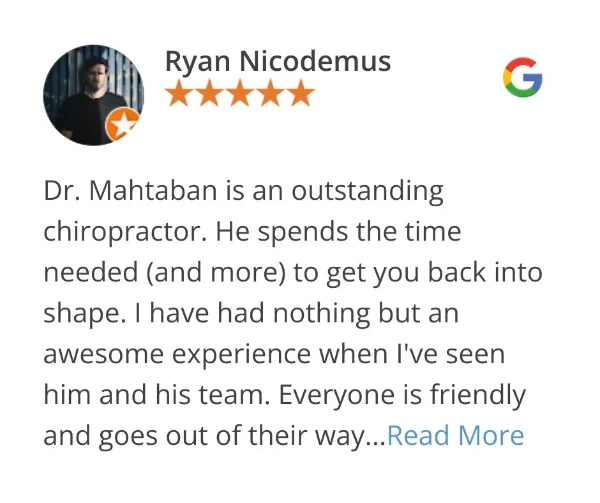
Spinal Decompression Patient Testimonials & Reviews





Book an Appointment for Spinal Decompression in Beverly Hills
If you are experiencing symptoms requiring back pain treatment, neck pain, or nerve symptoms, spinal decompression may help.
Call us at (310) 692-4469 or schedule a consultation using the booking tool below.
Frequently Asked Questions (FAQs)
Is spinal decompression safe?
Yes, spinal decompression is safe when performed by a trained chiropractor. It’s a non-invasive treatment with minimal risks, offering a gentle approach to relieving spinal pressure and improving mobility.
How long does each spinal decompression session take?
Each spinal decompression session typically lasts between 20 to 30 minutes, depending on the severity of your condition and your personalized treatment plan.
Is spinal decompression painful?
Spinal decompression is generally not painful. Most patients experience mild stretching or pulling sensations; any discomfort is usually temporary and similar to post-exercise soreness.
Which spinal conditions are commonly treated with decompression?
Spinal decompression is commonly used to treat conditions like herniated discs, sciatica, degenerative disc disease, spinal stenosis, and general back or neck pain.
Do I need a referral to start spinal decompression treatment?
No referral is required for spinal decompression treatment. You can schedule a consultation directly with your chiropractor to determine if the therapy is right for you.
Can spinal decompression be done without surgery?
Yes, spinal decompression is a non-surgical treatment. It provides an effective alternative for relieving spinal pain and pressure without the need for invasive procedures like a laminectomy.
Is spinal decompression safe for older adults?
Yes, spinal decompression is generally safe for older adults. It is a non-invasive treatment that helps alleviate back pain and improve mobility, though individual conditions should be assessed first.
Can chiropractic care help with disc bulges or herniated discs?
Chiropractic care may help reduce pressure, restore motion, and support healing, depending on the case.
What chiropractic techniques are used alongside spinal decompression?
Flexion-distraction techniques, targeted adjustments, and supportive therapies may be used together.
At Elite Chiropractic Beverly Hills, supportive care may also include soft tissue work, rehab, and movement-based guidance depending on your diagnosis.
Does spinal decompression help reduce back pain and sciatica?
Many patients experience reduced pain and improved mobility, though results vary by individual.
What lifestyle changes support spinal decompression results?
Good posture, movement breaks, hydration, and following home guidance help support progress.
At our clinic, postural habits and movement patterns are part of the bigger picture, since unresolved daily habits can cause symptoms to recur.